Sunday, February 26, 2006


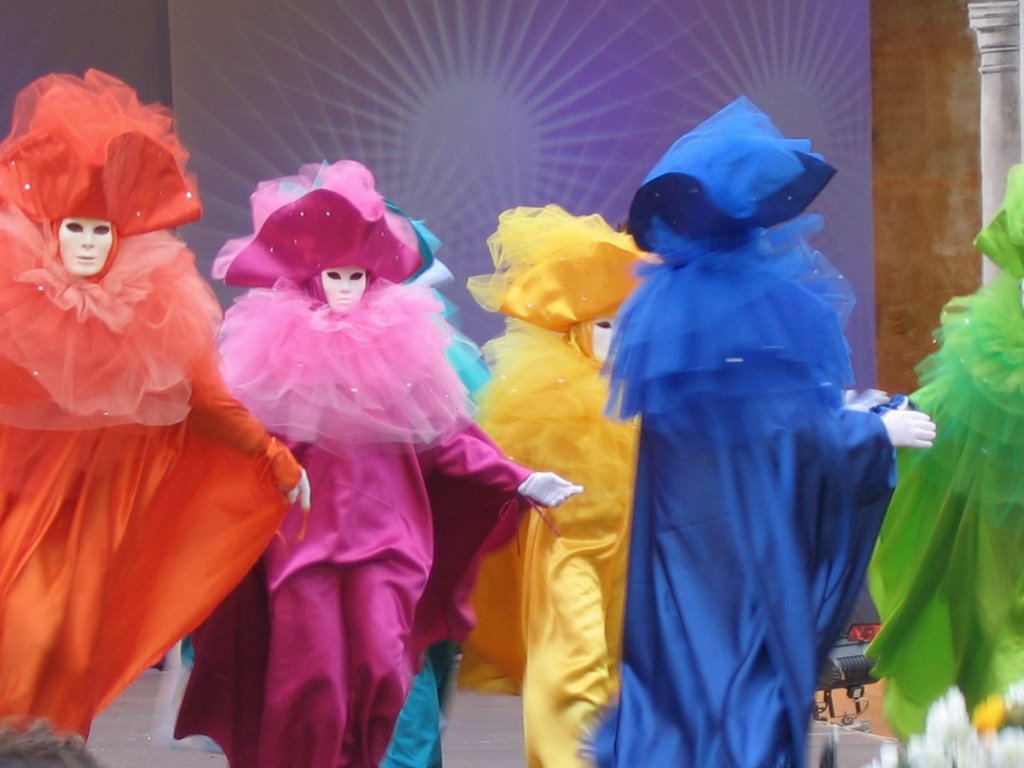
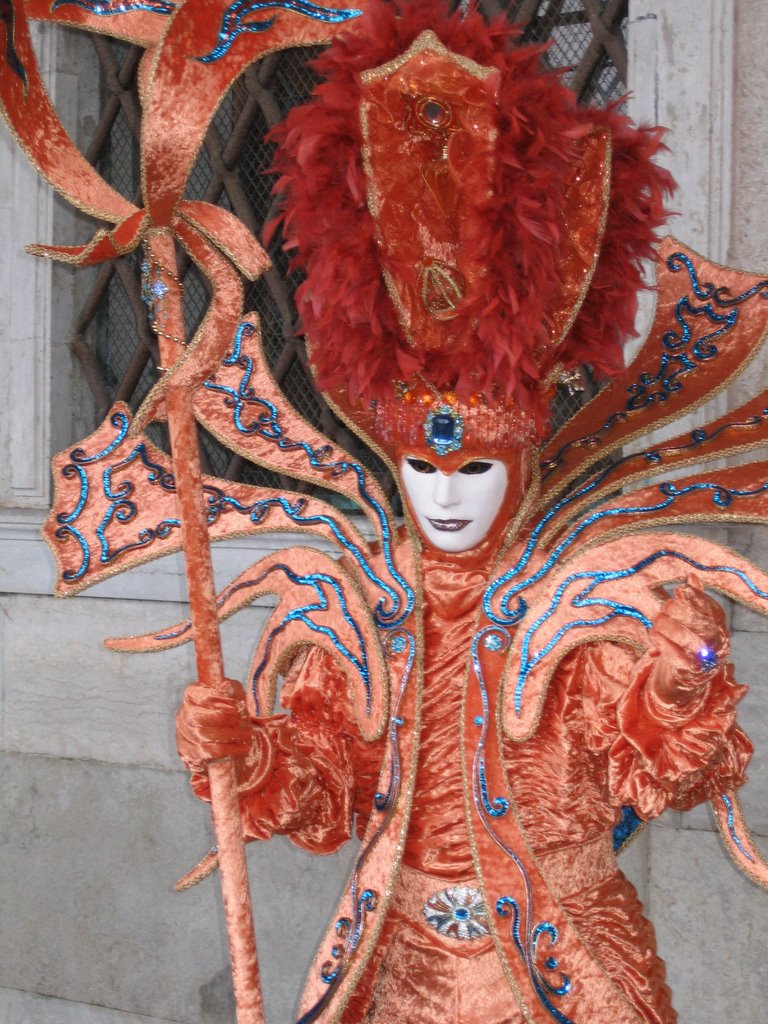
Costumes for Carnevale in Venice
The beginning of Spring in Slovenia.

It is time to celebrate the end of winter and the beginning of the Lenten season. Buds on trees and bushes are beginning to pulse and swell and everywhere there are preparations for Carnival. In Slovenia the celebration is called Pust based on pre-Christian traditions of driving the winter away to allow room for the spring to come rolling in. There are a variety of celebrations around the country each with its own traditions and costumes. The celebrations culminate on Shrove Tuesday where many of the floats and costumes are burned along with the negative bad feelings from the past year. Then after Ash Wednesday people fast [post] giving up the fatty foods and meats that kept them warm in the winter and prepare their hearts, souls and gardens for new life.

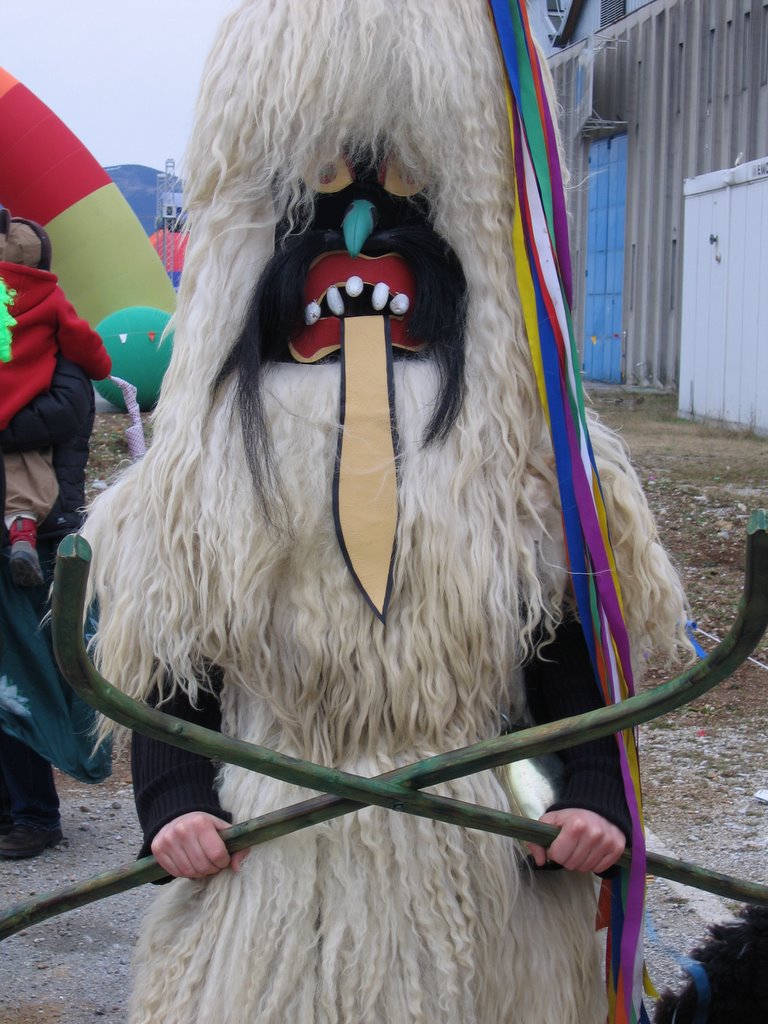
The Kurenti, which at one time were believed to have the power to chase away winter and usher in spring, are the central figures of the annual Kurentovanje festival.
The Slovenian rite of spring and fertility is called Kurentovanje. This event is celebrated for 10 days. Although the origins of Kurentovanje festivities are obscure, the celebration may have come from earlier Slavic, Celtic or Illyrian customs. Similar traditions are found throughout Central Europe in parts of Croatia, Hungary, Serbia, Bulgaria and elsewhere.
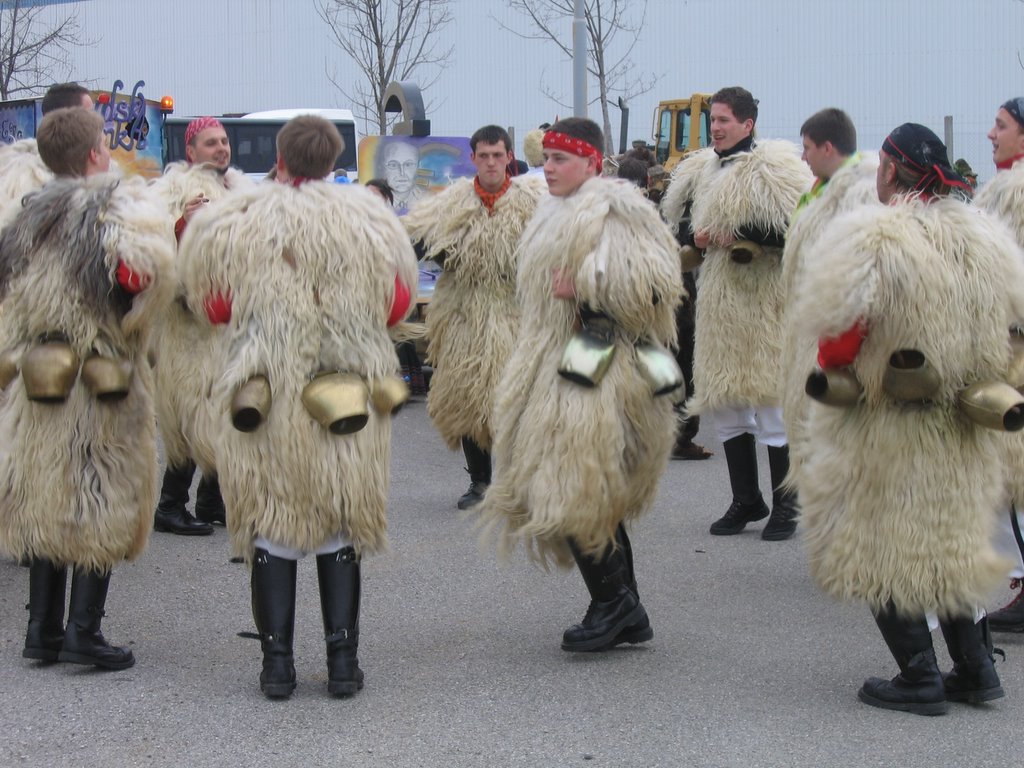
Kurentovanje is a distinctive pre-Lenten festival. The name comes from the festival's central figure, the Kurent, who in earlier times was believed to have the power to chase away winter and usher in spring. During this extravagant festival, Kurent, the god of unrestrained pleasure and hedonism, comes to life. Groups of Kurents (kurenti) dress in sheepskins with cowbells hanging from their belts. They wear furry caps decorated with horns, streamers, feathers and sticks.

The Kurent mask is a major work of folk art in Slovenia. The masks are made of leather, with two holes cut out for the eyes, and a single hole cut out for the mouth. The holes are surrounded with red paint. A trunk-like nose is attached, along with whiskers made of twigs and teeth made of white beans. The final touch is a long, red tongue which dangles down to the chest.
The Kurents travel throughout the town, moving from house to house to scare off evil spirits with bells and wooden clubs that are topped with hedgehog spines. A devil acts as the leader of the procession. He is covered in a net to catch souls. The Kurents are presented with the handkerchiefs of young girls. These gifts are attached to their belts. The people of the town smash clay pots at the feet of the Kurents for good luck and good health.

This info came from www.snpj.org. We attempeted to go to Ptuj where they have the largest Kurent festival, but the bus connections made it impossible to get there. We will try another year when we have a car. In other festivals the creatures paint their bodies green using leaves and growing things as decorations with bells to scare away the winter. These festivals are accompanied by costume parades, little children begging for candy from house to house, playing tricks on people and lots of parties with good food freshly made sausage and salami, and flansiti [a delicately thin fried pastry similar to elephant ears at the fair]. I went to the Karnival parade in ^Sempeter and there young men were dressed in the kurent costumes along with floats that made political statements about bird flu, the introduction of the Euro next year and the mayor who was being accused of being a gypsy.

Venice is all decked out in splendor for Carnevale. People from all over the world elaborately dressed in masked costumes stroll slowly under the porticoes posing to be observed for picture taking. Many of the designs are traditional baroque clothing excessively decorated with rococo in gold and bright colors, but others are elaborate statements of fancy in even more brilliant colors. Friday was the fashion show and the judging of the best costume for 2006. One of the judges was a famous Italian actress so the paparazzi were all over the place trying to catch the perfect photo of Miss Beautiful in her 18th century gown. The atmosphere was a frivolous elaborate pretense but the quality of the costumes and attention to detail was unbelievable and most of those who were unmasked seemed to be middle age and having a fabulous time.

At choir practice the celebration of sausage continues. Jo^sko cut his first homemade salami to share with us all. The carving was preceded with a speech sharing that he does not make sausages and salami just for himself, but for his family of relatives and friends and he wants to share the first flavor of the year with those of us in his choir. We toast Jo^sko with Na zdravje!, and everyone [except me] study the color, the texture and savor the taste of the new sausage. Dober, dober [good] is echoed around the table and more salami is gobbled up with bread, cheese and pickles. The wine this week is a different wine. Jo^sko was really surprised that I was able to discern the difference in the flavor, but this white wine has a greater depth of flavor, a richness that is different than that which he usually serves. He calls it a zelena [green] wine made from a grape unique to the region. Most of the wines are from French grapes, but this is a grape that is not often grown and the flavor is mixed and blended with a large dose of Slovenian pride. He offered me 100 congratulations because of my abilities to discern, and brought out the grand ringing crystal glasses for me to swirl, sniff and then taste. The glass did not make it taste better; I think I would have liked it even in a paper cup. Jo^sko’s wine is not aged in barrels, but made in and served from large stainless steel vats. I think the alcohol content must be low because the texture is light and easily consumed with very little residual affect. But I am discovering and there is so, so much to learn about wine.

I am experiencing a language break through!!! For 3 hours on a rainy cold Monday I studied Slovenian grammar trying to make sense of cases and declensions. Every noun or adjective takes a different ending depending on how it is used. So one must consider the four declensions 1. a feminine noun ending in “a,” 2. a feminine noun ending in a consonant, 3. a masculine inanimate or animate noun 4. a neuter noun ending in “o” or “e”. And there are no articles as in French or Italian to tell you the gender. Then depending on the use of the word the endings change in the different cases. The nominative case is easy – the subject of the sentence – no changes. The genitive case is the direct object of all negative verbs, 1. “a” becomes “e”, 2. consonants add “i”, 3. “u” is added to masculine noun [Robertu], 4. “o” and “e” become “a”. Each case has its own set of rules [plus the million exceptions]. The dative case is use for the direct object when something is done for someone or something. The accusative case is used when seeing someone or something. The locative case is used for location. The instrumental case is used with someone or something, and each has 4 declensions. And I haven’t even mentioned plural or dual [if there are 2 involved]. So for a simple word like table [miza] you have 1. miza, 2. ni mize, 3. mizi, 4. mizo, 5. mizi, 6. mizo, and plural 1. mize, 2. ni miz, 3. mizam, 4. mize, 5. mizah, 6. mizami. The breakthrough comes with understanding this. I can’t do it, but I understand it. Finally when I hear a word I can discern the root word and recognize that there is an ending and not become debilitated because of the different sounds [oh by the way sometimes the words are then pronounced differently or stressed differently because of the ending too]. Slow I plod along one word at a time, one phrase at a time and eventually I may be able to create an accurate sentence.


Pust Celebration in ^Sempeter

Kurant costumes

An advertisement for a bank that shows a "real Slovene" man and his love of sausage.

Monday, February 20, 2006


Trimming the vines in the vineyard near Dornberk

Sunday, February 19, 2006

Legal in Slovenia!

We have finally received our documents to stay and work in Slovenia!! We have been here 5 months, and it has taken this long to wade through the pylons of paper that balance the bureaucracy. I have no idea how Miha Rossler from the Slovenian Embassy in Washington realistically expected us to complete this process before we left the U.S. First we needed both a contract for work indicating the monthly salary and a contract for housing that indicates the amount paid for rent. The school did indeed send a contract to Bob at home, but it arrived a month after he had been teaching and had already been paid, and of course we needed to see the apartment before we would sign a contract for a year. With the two contracts and our passports in hand we first registered our presence in the city with the police as tourists and became legal for 3 months. With that stamp of approval from the city Bob applied for a work permit, but the work permit was only issued for the 3 months of our tourist registration. When he received the work permit he applied for the residency visa, but since the visas are only issued for the calendar year he was only legal for a month until the end of December. The process could not begin for me until my man with the work permit was legal so after 3 trips to Trieste, Italy to the Slovenian Consulate I too was legal, but for only 2 weeks. Then in 2006 we started the process again! After proving that we are not criminals in 2 countries, purchasing insurance in 2 countries and getting little round purple stamps on a pile of documents we are not able to read, Bob was finally issued his visa from Miss Amelia in the office of foreign workers in Nova Gorica. Ten days later I have my beautiful multicolored visa pasted in my passport and until the end of August it is legal for us to live here. I am not able to work legally without a work permit, but I am able to earn a little spending cash with concerts and English conversation tutoring for students.

Every Wednesday after choir practice the singers continue to socialize with homemade wine, homemade sausage, homemade ^snops, homemade pork rinds and often more food than we certainly need to eat at 9:30 pm. The vegetarian in me is a tad squeamish about all the pork by products, but I do understand there is real art in the raising, slaughtering, preparing and sharing of these delicacies. After careful preparation the salami hangs in a room of specific humidity air-drying for a month and when the creation is perfect the artist slices his salami into little pieces as if he is sharing his most precious sculpture with an adoring public. There is social tradition stuffed in these sausages as well. Men share the work dressing the pig, they have competitions with blind judging for the tastiest sausage and they gather with their friends and family to share the specialty of the house. Hogs are a part of many celebrations as well. The choir sang for a 50th wedding anniversary mass and to thank us the couple served a young pig roasted on a spit and presented whole. And all of this hog activity happens during the cabin fever months bringing people together around fires and glasses of home brew.

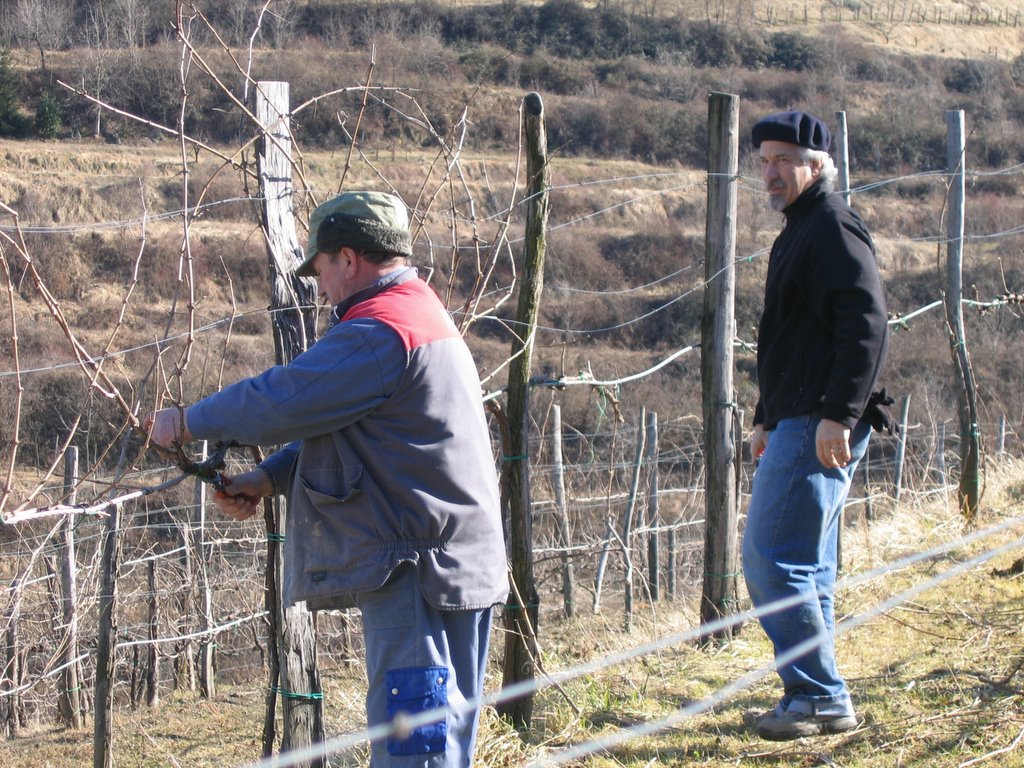
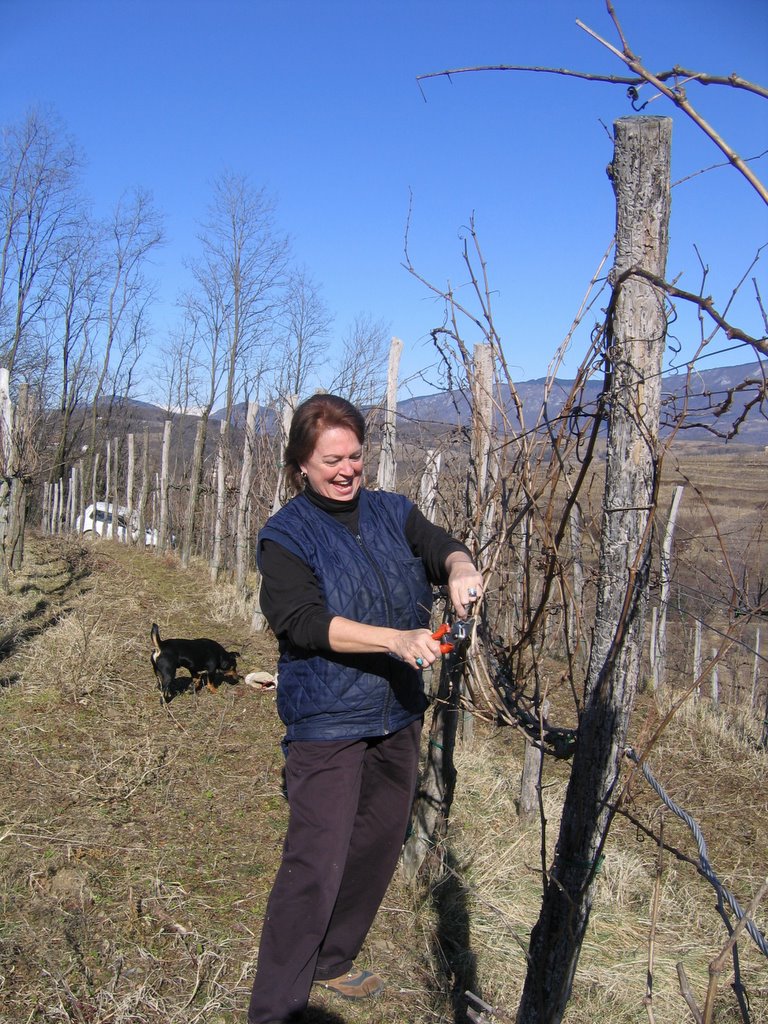
For 7 hours we shared the work in the vineyards with Jo^sko and Alida on a glorious sunny clear Saturday. The vines need to be deeply pruned so that the grapes will grow big and juicy from the new growth. They cut off all but 3 or 4 eyes and discard the rest of the vine. Bob follows Jo^sko while I follow Alida. They cut, we pull, removing all the old growth. The grapes are grown in different styles. Some of the vines are 30 or 40 years old and are twisted down from above and tied to lower wires in the style of Jo^sko’s father, while others will twist around the wire at the same level as the top of the trunk. The vineyards are terraced on the hillside with grape vines everywhere in view on all the hillsides around. Jo^sko has acres of vines that need pruning in the early spring, but care and cleaning every week during the summer and picking and preparing in the fall. The fruit of his labor is song and laughter in his wine cellar every Wednesday night.

We invited an American doing research at the Poly Technical Institute for dinner this week. Stephen is here for 6 months on a Fulbright studying issues of environmental chemistry. The 3 of us sat over dinner and never stopped talking for 3 hours. It was so good to be able to talk with someone with common experience and point of reference. The inability to converse on a level of deep understanding continues to haunt me. I test on the cusp of introvert/extrovert on the Myers Briggs test so that when I am comfortable I am very extroverted, but when I am in unfamiliar territory the introvert takes over. This is one of the reasons I don’t like to parties, because the noise makes it difficult to talk and there are usually too many people I don’t know. Living here without the language sends me into introvert survival hide in a corner mode. I am observing a lot, learning an enormous amount, but the extroverted Kay is feeling sorely neglected.

St. Valentine blesses the plants and opens up the growth of the roots in Slovenia. The result of his blessing is evident already with the snowdrops blooming, the pussy willow bushes fluffy with fur, little yellow crocuses smiling in the sunshine, and near our home I saw a male and female pheasant cavorting in the long grass. Spring is just a breath away.

Sunday, February 12, 2006


Skiing in Slovenia

A drink at the bar?

Easy slope?

View from Kanin

View from the lodge

Friday, February 10, 2006

Ski Adventure in Slovenija

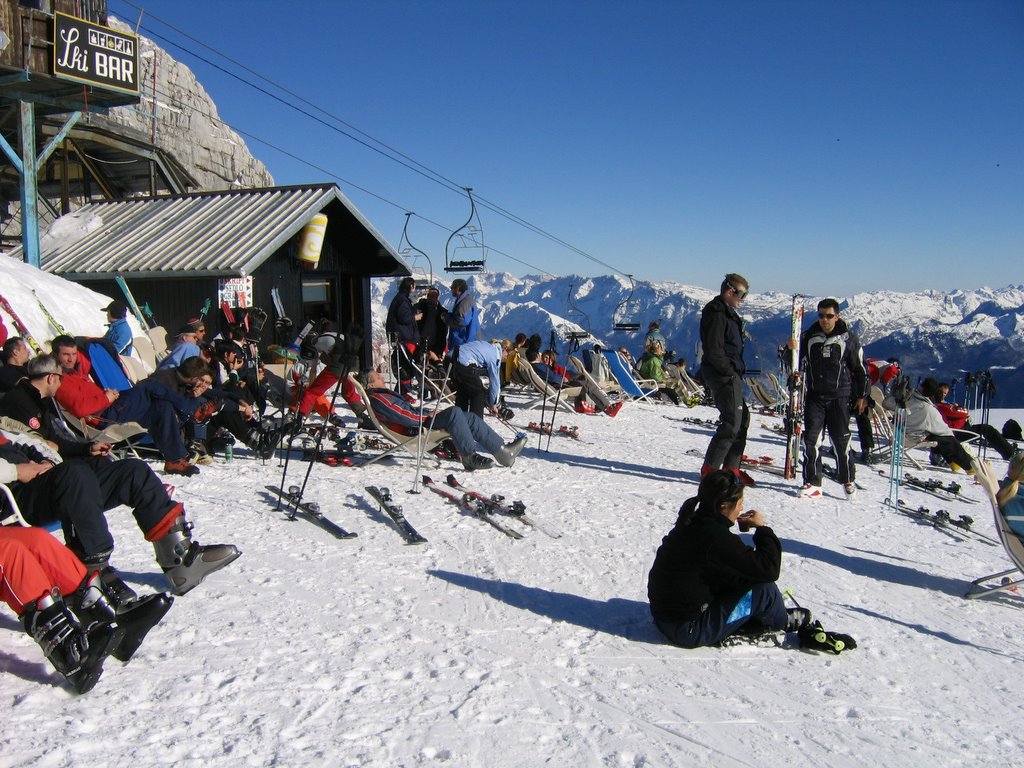
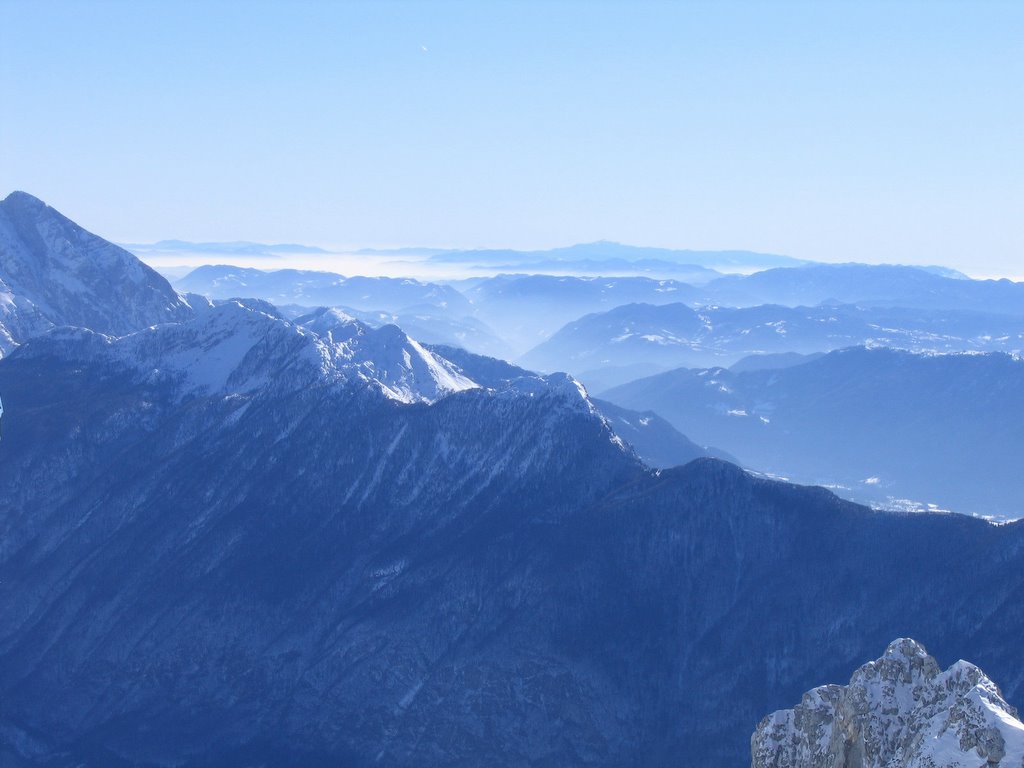
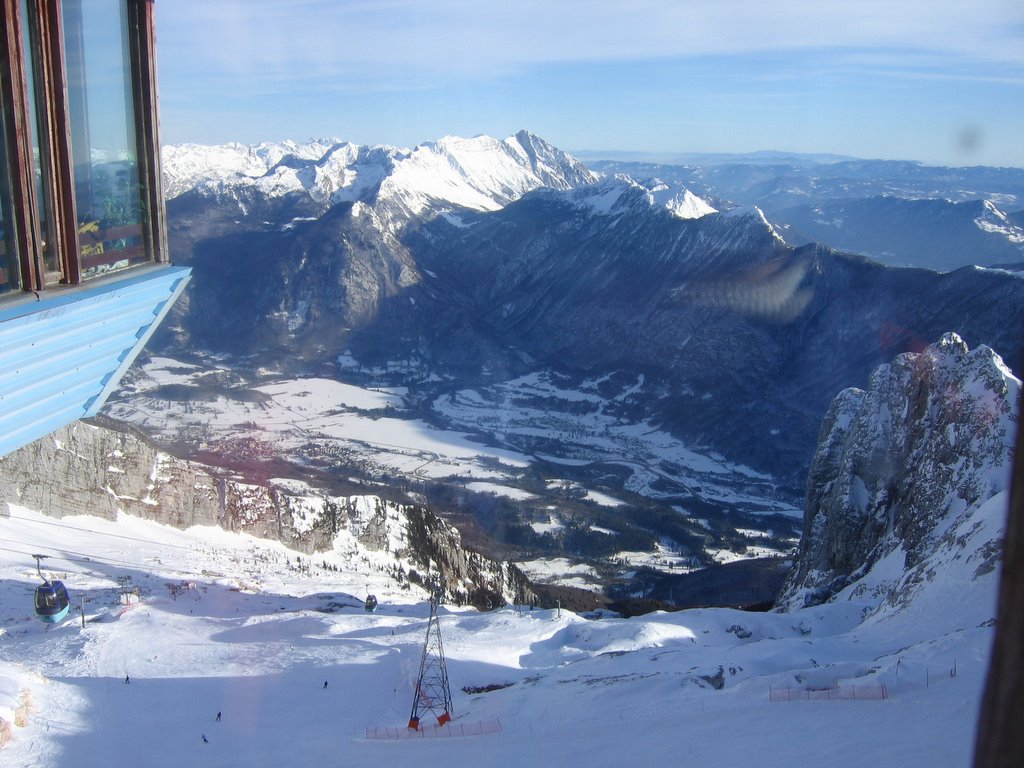
The Gimnazia takes first year students [9th graders] to Bovec for 3 days to ski Kanin. When they offered me a trip to ski, if I would do activities with the students in the evenings, the adventure was too great to refuse. Bovec is a village nestled in a bowl surrounded by iced peaks stretching for the heavens and leafless hillsides leading from the valley like the nap of a sculpted carpet or the stubble on the chin of a teenage boy. The mountain of Kanin looms 1765 meters [5790 feet] above Bovec. Slovenes and French privately own the ski area with a plan to open the slopes to the Italian resort on the other side of the mountain in the next year for international skiing. This is not a resort. There is no roaring fire and cozy lounge chairs. This is a place for serious skiers. The gondola shed/ski lodge is a metal building with a bar, a cafeteria and hard wooden chairs. The only redeeming quality is the view.

The gondola floats silently straight up the mountain stopping at 3 stations along the way. The “easiest” slopes are at the top, but easy is a creative description. There is nothing easy about any of this. The climb from the gondola shed to the towline carrying skies, poles and walking in inflexible plastic boots for the first time is almost enough exercise for the entire day. The tow is a circular disk that is shoved between my legs by the grunting slope worker that then jerks me upward flinging to the top of the hill. When my skis cross at the tip [which they are want to do on a regular basis] the ride comes to a screeching stop and I am twisted and tangled with poles, skis sliding into the path of the next skier on the tow. I thought the bindings were supposed to release on the skies to keep me from breaking my leg! Instead I need the assistance of 2 strong men to pounce on the bindings to free my boots. They were able to carry my skies to the top, but my only means of transport was crawling like a baby on my hands and knees. The personal humiliation is of course intensified by the 4 year old who dashes zipping past me on his cute little skies while I try to crawl out of his way.

“Skiing is like riding a bicycle – you never forget”, but I haven’t been on this snow-covered ride since before Aaron was born [he is now 30]. I do remember how it is supposed to feel, but my muscles don’t remember how to do it. Crouch, lean forward, snow plow, knees together, dig edges into the snow – sounds easy, but just as often as not I would go the opposite direction than I intended. On a large open slope this would be no concern, but on this “beginner” hill there are beginning snow-boarders sitting at the end of the tow, they are scattered prone all over the slope and their jackets are in a pile in the middle of the hill. An obstacle course is rarely the chosen path for an out of shape out of control skier who has a chronic tip-crossing problem. I think the Olympics in Torino should include a style of skiing that mandates tips crossed at all times – I would be a gold medal winner.

Sometimes [no often] the concentration of keeping my skis in “pizza slice” position with a grapefruit between the tips was distracted by the sun sparkling in the distance on the Adriatic Sea, or the echoing mountain ranges rolling to the coast, or the layered rock rising above me against a deep blue sky like building blocks stock piled to be used later for government buildings, or the intensity of the heat from the sun at 2250 meters [7,395 feet].

“Skiing is the Slovenian national sport”. Only 2 of the 70 students do not have their own equipment. Ski outfits match the boots, the gloves, the hats and goggles. This is a serious sport. I’m just thankful my friends lent me warm clothes, equipment and my mother sent me warm gloves for Christmas.

By the end of the first day I am no longer falling, the tow is a relaxing amusement ride, the sense of control is better and I am no longer causing fear in the hearts of the other skiers. By the end of the second day I think I am ready for the next hill. Alan, the high school student who has been giving me a little bit of guidance in very hesitant English does not agree. I throw his caution to the wind and climb on the 3-person chair lift to heaven. Fortunately I ask Alan just as we are about to embark from the chair lift for last minute instructions. All he says is “Go left.” [This is the point where I am really wishing that his English teachers had been very insistent that he be able to communicate in a second language]. What he didn’t tell me is that going either right or left is going to take me to the depths of this mountain. Getting off the chair lift is an exercise in extreme skiing. If I lean right I tumble over the cliff immediately, if I lean left the dive over the cliff is delayed a few minutes. Of course I am sitting in the far right seat and the moment I take to register fear is just long enough to almost get knocked in the head by the chair lift. [There is no mercy for the ignorant here!] Of course I follow Alan’s directions and go left, but the sight of the black diamond slope just a slip and a slide away from my crossed skis replaces the tiny bit of confidence with FEAR. I maneuver in pathetically slow “pizza” position along the narrow ridge to the gathering spot for the other “beginner” students. Here Alan sends the others on their way pa^cas [slowly]. It looks steep, but they seem to have a handle on their speed and form and I gather confidence. Alan looks at me with disbelief but coaxes me on my way. I do fine slowly leaning right into the hill, but when I turn to go the other direction my edges do not cut in, I gather speed and I careening completely out of control down the hill with way too much speed toward a drop off that has only a single rope as a warning. Fear is the wrong thought process, but as the drop off looms ahead and I am tumbling toward an unknown precipice the toddler survival technique sets in. “Sit down and hold on tight!” The bindings keep a death grip on my skis, so tuck and roll is impossible with my feet stretched to 6 feet long. The people on the chair lift above call out uredu? [OK?], and all I can do is laugh. Laugh because here I am at the top of this nightmarishly steep slope and somehow I have to get down, laugh because I am not hurt and laugh because it is a better choice than crying. After knocking Alan down he is able to hoist me up and I try again. But fear has its ugly little claws wrapped around my throat and the cliff with the unknown bottom is calling my name. I collapse into a pathetic heap, take off my skies; give them to Alan and I walk slowly down the mountain and sit the rest of the afternoon sipping cappuccino and staring at the top of the world.

Kanin is not the best place to be a beginner, but I was not going to let this mountain beat me. The next day I stay on the smallest slope, I stop thinking about “pizza” position, I keep my knees parallel the way they remember from 35 years ago in Colorado, I stop thinking about my skis and feel the flow of my body leading my torso to the direction I want to go. Now I am really beginning to have control, I am not falling and it is exhilarating. The third day is too short. I think I would have tried the bigger hill if I had one more day, but it will be waiting there for me when I return.

When I moved to Colorado 35 years ago I intended to stay there in the mountains forever. I was always looking upward circling around and around never taking my eyes off the colors, textures, and shapes of the mountains. I was in love with the mountains and I claimed them as mine. When I fell in love with Bob the flat fields of Ohio came along with him. The pain of unrequited mountain love was so great that I never returned to Ft. Collins or Rocky Mountain National Park. I was too afraid that my passion for the mountains would force a wedge between Bob and I and I would be discontent living the breadbasket of the U.S. Here in Slovenia the passion for the mountains is rising rapidly, the beauty pulls tears to the surface and sobs of longing for the mountains rise from my soul. Fortunately Bob is here to share this with me.

While I was skiing Bob was partying in the home of the American Ambassador Thomas B. Robertson and his wife Antoinette. The Embassy sponsored an essay-writing contest for students in the European classes. The students were asked to write about how the Slovenian and American cultures can learn from each other. Fifty students submitted essays and Bob was on the committee to read the top ten essays and choose the strongest three. The three winners receiveda lap top computer and the other seven received books. All were invited with their parents and teachers to the Ambassador’s residence for a celebration and American desserts. He enjoyed the opportunity to see the home and meet and talk with the Ambassador and his staff.

Ambassador Thomas B. Robertson is a career member of the Senior Foreign Service with the rank of Counselor. Robertson began his career in the Foreign Service in 1981, serving overseas in Moscow from 1982-84 as aide to the Ambassador, and as Political Officer in Bonn, Germany from 1984-86. From 1986-89, he was Deputy Director for Exchanges in the Office of Soviet Union Affairs at State.

In 1990, Ambassador Robertson moved to Budapest, Hungary, where he was Chief of the Political Section. He worked in the Office of the Special Coordinator for Counter terrorism 1993-94, as Special Assistant to the Assistant Secretary for European and Canadian Affairs in 1994, and as European Specialist in the Bureau of Legislative Affairs from 1994-95. Ambassador Robertson was the Law Enforcement Counselor at the American Embassy in Moscow from 1995-1997.

In April 1998, he returned to the Embassy in Budapest as the Deputy Chief of Mission, where he served until March 2001. From March until August 2001, he served in Hungary as the U.S. Charge d'Affaires a.i.

Ambassador Robertson worked at the National Security Council as Director for Russian Affairs beginning in September 2001. In 2002, he returned to the Department of State to serve as a Career Development Officer in the Senior Level Division of the Bureau of Human Resources.
Before entering the Foreign Service, Ambassador Robertson was a guide and then an Exhibit Manager with the U.S. Information Agency, working on cultural exhibits in the Soviet Union, Hungary, Romania, and Zaire from 1975-81. He has a bachelor degree from Princeton University, masters from Johns Hopkins School of International Affairs, and has studied in Germany, the Soviet Union, and Italy. From 1997-98, he studied at the Naval War College in Newport, RI. He speaks Russian, German, Hungarian, and some Slovene, French, and Italian.
He is married and has two college-aged children.
Copied from www.state.gov/r/pa/ei/biog/37273.htm

February 8 is France Pre^seren Day, the National Slovenian Day of Culture . Pre^seren was a poet who lived in the early 1800’s in Ljubljana. He had a life of unfulfilled love, disappointing work and too much drink, but his poetry is celebrated with a holiday, a statue in the main square of the capital and a portion of his verse is used for the national anthem.

God's blessing on all nations, Who long and work for that bright day, When o'er earth's habitations No war, no strife shall hold its sway; Who long to see That all men free No more shall foes, but neighbours be.

On this day the entire country closes down to celebrate culture. The schools, stores, banks, and businesses are all closed; you can’t even buy a loaf of bread. There are cultural programs of singing, dance and poetry readings broadcast on TV. The museums are free, the children are reciting poetry, there are local, regional and national song writing competitions and the flags are flying proudly. It is interesting that in the US we have days celebrating politics, but does the average person even know when Robert Frost, Emily Dickenson, Oliver Wendell Holmes, or Edgar Alan Poe lived?

Sunday, January 29, 2006

Slovenian language

It has been a bad week for language. This week I insulted a woman I am very fond of at English conversation group by using the familiar greeting rather than the formal. She was “shocked” by my familiarity and firmly corrected me in an email the next morning saying, “only English have forgotten the use of thou.” Unfortunately the book I am using to learn the language has many familiar conversations and in my enthusiasm to use my Slovene I forgot all about the formal. I knew I had made a mistake the minute I said it by the look on her face. But by the time I sorted out if ‘vi’ is used for formal or just plural and is it what I should have said or should it be ‘ste,’ she and Bob had moved on to talking about something else. In English I am very uncomfortable talking with people the age of my parents using their first name so it is normal for me to call someone Mr….. or Mrs….. even if I know them well, but here so little is automatic except saying things wrong. The use of ‘thee and thou’ has not been used in the English language for centuries and then it was the familiar usage while ‘we’ and ‘you’ were the formal/plural. One explanation on the internet on why the two forms faded from the English language from Larry Trask quoting Leith saying “…16th-centuryEngland, in comparison with most other European countries, was characterized by a fluid and prosperous middle class, in which rapid rise was possible by entrepreneurial success. England, he argues, therefore lacked the comparatively rigid social structures typical of other countries, at least as far as the middle class was concerned. Whereas every speaker of French or Spanish knew his own station and knew that of everyone else, so that power-based non-reciprocal usage could be readily maintained, a middle-class English person was by comparison insecure: he could never quite be sure whether a stranger was an inferior, an equal, or a superior. Therefore, Leith concludes, the reciprocal use of `you' rapidly took hold among the middle class as the safest option, as a safe way of avoiding giving offense to a person one might need to do business with or ask favors of.” [Linguist list 7.599 http://www.quaker.org/thee-thou.html]

Unfortunately Gordana’s response sent me into a wave of tears of frustration. This language is so complicated with all the declensions, cases, endings, word orders that after 5 months I still do not have a friendly greeting correct. It seems that no matter how I use the language I use it incorrectly and it is causing me to be afraid to open my mouth to say anything in Slovene.

When someone does try to help me I am sadly usually more confused than I was before I asked. It seems to be a national condition that the Slovenes are unable to give a simple answer. They have to give me every possibility that I would ever use in my entire life and in every possible situation. So, to the question “How should I greet a woman who is my senior with respect?” the answer would go something like this:
“You could say ‘Hello, Mrs….’, or you could say ‘How are you today Mrs…..’ but if you are uncertain of her name you can just say ‘How are you today?’, but if you are really interested in how she is you could say ‘Are you doing well?’, but if you really don’t want to get the run down on her medical problems you could say ‘Have you had a nice week, Mrs…?’, but again if you don’t know her last name you can just ask her ‘Have you had a nice week?’, but don’t say ‘Hi, how ya’ doin’?” because that shows familiarity, but you could say ‘Hi, how are you?’ as long as your tone of voice does not sound to familiar, be certain to be really sincere in the greeting, but if you are too sincere you may get more information than you want. Is that clear?”

By the time the answer to my simple question is completed I have forgotten the original question, and I still don’t know one consistent way to say hello. And sadly this is the process with any question about word usage. I’m feeling, as I know less now then I did in September. How is that possible?
I also am still taking Italian classes for ‘stranieri’ [foreigners] in Gorizia. The class has diminished in number from about 25 to around 10 since October, and I am one of the ones hanging in. All the people in the class, except me, live in Italy and use the language daily so they are able to communicate more easily than I. They rattle on and on in Italian while I have a hard time discerning if the language that is coming out of their mouths really is even Italian. Speaking Italian with an accent from Bangladesh or China or the Ukraine sounds very different, to my ears, than the language of the teacher. She seems to understand them well, but I get that big-eyed glazed stare as my brain cells are searching and searching for something recognizable. Yet I understand the written assignments better than most and the women on either side of me are always checking my paper for understanding of the assignment, but if I try to have a conversation with them I understand nothing!

I missed class twice this week because I chose not to ride my bike up the hill in the snow in below freezing windy temperatures. The next time I attended class I understood nothing! Not a thing! It was as if I was in the wrong class and they were years ahead of me in their understanding. The people around me seemed to understand the readings, while I was madly flipping through my dictionary. It was as if my brain just shut down and said “No more! Two new languages at the same time is a kind of insanity I will not support.” So the lesson learned is never miss class, study harder, watch out for strange accents, smile constantly and nod a lot.

My struggle with these languages causes me to be more and more impressed with the fluency of the people around me. Gordana [my senior friend who was so shocked by my familiarity] is from a Croatian family, lives in Slovenia, takes senior classes in Italy, studied medicine after WWII in Germany, and started studying English 4 years ago when the Mormon missionaries in Italy began offering classes. She speaks Croatian, Slovene, Italian, German and English fluently. She is able to discuss subjects of great depth with me in her newest language, and I just sit in amazement.

A subject actively discussed by many people around us is the reawakening of President Dr. Janez Dernovsek [Slovenia has a president and a prime-minister]. Dr. Dermovsek underwent surgery for a malignant tumor of the kidneys in 1999. Since then the disease has metastasized into his lungs. He has rejected traditional and alternative medicines and has moved to the country, eats no animal by products, makes his own bread and follows a strict exercise routine. He is quoted as saying; “If we are afraid of something and dwell on it, then we invite it to happen. Everyone needs to be open with themselves, have their thoughts in order and change their attitude towards the world.” In following his own advice he has begun taking an active role in encouraging the United Nations to strengthen their humanitarian involvement in Sudan, he went to Bolivia for the inauguration of the first indigenous leader there, he has presented a plan for the independence of Kosovo and he has called on the parliament of Slovenia to resolve the issue of those of other nationalities who were residing in Slovenia when independence was declared in 1991. Since his illness he has immerged as a strong voice in the Balkans and is the cause of much discussion over coffee. [For more information about Dernovsek and Slovenia go to the English newspaper http://www.sloveniatimes.com/ ]

The days are getting longer and although there were gigantic icicles hanging from the drips in the tunnel this week we know that soon we will not have to wear layers and layers of clothing to keep warm on our way to town.

Saturday, January 28, 2006

New Year in Slovenija. Sre^cno novo leto!

As I write this I am defrosting my refrigerator out on the front stoop. We have a small apartment refrigerator with a freezer large enough for 2 ice cube trays [in good European tradition I no longer use ice cubes – no room]. It has collected enough ice to make a snowman. I have not defrosted a refrigerator in many, many, many years, but my recollection is that there is a drip tray that catches the water. Well not in this little gem. I have no idea where the water will go so I emptied it of the food and dragged this little baby out in the sun so I don’t have a flood in the house. We live in an upscale neighborhood and my porch is the only one proudly displaying a refrigerator. I think of this as a little bit of my down home backcountry heritage that I am sharing with the Slovenes.

People greet each other everywhere with Sre^cno wishing good luck and happiness in the New Year with kisses back and forth on both cheek; 3 times. It appears that people remember whom they have and have not seen in the New Year and the greeting is shared with the greatest joy the first time a person is seen in 2006. On the first day back to school Bob was kissed more than ever in his life.

The European classes have been gathering stories from their parents and grand parents to be published in English at the end of the school year. One student wrote of the ceremony the first day of school in which her father was initiated into the national socialist Young Pioneers. He wore his blue pants with a white shirt when he received his red kerchief to proudly wear around his neck. He pledged to be a good student, a good worker and to serve community and country. The socialist commitment was to reaching individual and collective potential and sounds very much like the Boy Scouts, yet this action was portrayed in the U.S. as a youth brain washing and something to fear.

I remember nuclear war drills that sent us under our desks hiding our heads from radiation, or running faster than safety allowed to the school basement to crouch on the floor, knees pressed against the wall clutching our heads to our chests to protect us from the fireball that would come when the enemy attacked. This is the enemy. These people who meet us wishing us great happiness and good health for the New Year are the people we were taught to fear. These people, who as youth took pledges to care for self and country, are the face of evil and fear.

This confuses me. How can people be enemies one day and allies the next? I asked my friend Gordana how the Slovenes were able to embrace the Germans so soon after WWII, and she said that the Germans were the first tourists with money to spend and willing to pay. The German army had their R&R in this area to recover from the 900-day siege that caused half the population of St. Petersburg, Russia to die of starvation. The soldiers remembered the beauty of the mountains licking the Adriatic coast and they returned with their families on holiday. She said that they never had problems with the individual German soldiers, they did not steal and rape; they were disciplined, and since after the war they had money so they were welcomed. During the war people warned “Shhh the German’s are coming” after the war they said “Shhh the German’s are sleeping.”

It is beyond my comprehension how war solves problems. It seems that the problems just shift, but only after the destruction of the very lives, families and cultures the war is designed to protect. I would like to think that when there is a threat of war all parties are using every possible peaceful means to resolve the conflict, but I’m afraid that now that the arms race is too appealing to those raised by GI Joe. I am encouraged by one of the motivations of the European Union. Quoting Jeremy Rifkin “The European Union is often confusing for people because it was built on sharing power and there is absolutely no precedent for it. People came together in 1945 and said we’re not going to kill each other anymore. We’ve been killing each other for 2,000 years, the Europeans say, and we’ve had two world wars and a Holocaust, we’ve been diminished to rubble and we’re going to put down the swords and try to figure out a new way for people to govern themselves based on cooperation and trust. What’s so extraordinary is that that has never happened before in history. Until now, every government, nation and empire has been based on coercion and violence and seizing territories and waging revolutions. Even the modern democracies have largely been forged in bloodshed.” [Jeremy Rifkin , Why the European Dream is Worth Saving, Speigel online- July 28, 2005]

I hope the Europeans have learned from the devastation of their lives, that they have looked at the history of power leading the sheep over the cliff and are choosing to create a new world that will choose peace and peaceful negotiations over weapons. America has been so very blessed with never experiencing the devastations of war, but I am afraid that those very blessings are what make us cocky and certain that we are in the right and have the justification to impose our power on others different than ourselves.

During WWI the Slovenes and the Italians fought each other; they were killing their next-door neighbors. The photos in the Slovene and Italian museums are images of young men on both sides with the hope of the future before them. Youthful faces forced to promote negativity, destruction and despair, tearing gigantic holes in buildings 400 years old and starving a population they were commissioned to preserve. The leaders, the men of power and money, wanted more or wanted to protect what they had and were willing to sacrifice the peasants, the seeds of their nation, to maintain the life in which they had grown accustomed. It is no wonder that in this part of the world the movement after the war became a cry from the people for that which benefits the common good. Between the wars they Nation of Serbs, Croats and Slovenes tried to link their cultures under the Serbian king, but when the Germans smelled weakness the Partisans rose from the ranks of the farmland taking to the mountains to prevent anyone else from claiming their land. Tito was a Partisan who fought for the common people leading them to a place of unity and for the first time in 1000 years this land was under self-rule.

As we are able to have conversations with people they tell us that life was better under the socialists. People were cared for, everyone had what they needed, no one had abundance, but no one was without. Families were able to provide for themselves in a variety of ways and they had a quality of life rather than a quantity of things. Now the capitalist form of democracy that emphasizes the opportunity for the individual to acquire more is robbing the culture of their independence. There seem to be more general restrictions on many things creating a greater dependency rather than greater personal freedoms. The restrictions on raising and butchering animals, making and selling wine, growing and selling vegetables is creating dependence rather than freedom.

Slovenija is playing catch up with the rest of the Western world. Their desire to be modern may blind them to the pitfalls of loosing their culture, environment, and quality of life. Abundance on demand that is so prevalent in the US is available at a terrible price. In the US small markets and shops are unable to compete with large corporations, which is causing the death of our towns. We no longer know how to grow our own food or we choose to use our abundance of land for landscaping and grass rather than food, therefore we are dependant on large factory farms for vegetables and animals poisoning us with pesticides, growth hormones and genetically altered foods. The foods grown for long shelf life, so we can have anything we want out of season, are lacking in flavor, and I wonder if they also are lacking in nutritional value too. The Slovenes so far have kept the small shops all around the towns so that most everyone can walk to the market and the towns have the vitality of people walking and meeting at their neighborhood stores. The foods have brilliant flavors, the shelves have only seasonal fruit and vegetables, but the taste is more flavorful than anything I have ever tasted in the US. There is great pride in things made at home [doma]. In every home we have visited we have been offered foods produced at home, wine, liqueur, ^snops, kiwi, apples, spelt, vegetables, bread, pastries, and even a lemon for our tea picked by the priest in Ren^ce from his own tree. There is pride in most homes for that which they produce with their own hands and a great desire to share their blessings with us.

I hope that the Slovenes are able to identify the things that make them unique and strong. Their language and culture was protected from the invading forces in the past 1000 years because it was a peasant land. The peasants were not educated, had little contact with the outside world, so nothing was able to pollute who they were. The reformation did not change the influence of the Catholic Church much, but changes lead the priests to mandate that all the people learn to read. Every home had a grammar book, and a book on church etiquette. They became a nation of highly literate people in their own language protecting them from influences of other languages and cultures. In Ljublijana there are more words with German influence because of the Austrian-Hungarian leadership in the capital city. Here along the border there is some Italian influence in the language, but not nearly much considering that the people were only allowed to speak Italian for 25 years. There does sadly seem to be an unusually high influence of English though, shops and products have English names, technology vocabulary is English and words heard in movies and music are squeezing into the common vernacular. Using English is modern and this little country is in an identity crises; desiring that which is modern yet valuing the more healthy path. I really hope that Slovenija does not get swallowed up in the European Union. Again Jeremy Rifkin, “The European Dream emphasizes community relationships over individual autonomy, cultural diversity over assimilation, quality of life over the accumulation of wealth, sustainable development over unlimited material growth, deep play over unrelenting toil, universal human rights and the rights of nature over property rights, and global cooperation over the unilateral exercise of power.” [The European Dream, Rifkin, Jeremy, Jeremy P. Tarcher/Penguin Press, p.3]
The EU directives are designed to reinforce the positives of European life, but will a country this small have a difficult time keeping her head raised high?

We have been traveling on Saturdays by train. We went to Cividale near Udine on a gorgeous cold day. The city is still walled and boasts 5 churches within the walls, the oldest one we saw was built in 1121. We keep forgetting that the Italians are very serious about their afternoon lunch/family/siesta time and we arrived in town just as the market was closing up and the shops were shutting down. Most of the Italian towns we have visited have a weekly market that pulls into town early in the morning and clears out by 2:00. The tall shoe truck opens from both sides and crates are pulled off the truck and set out in the square selling shoes of all sizes and styles. When the shopping is finished the crates are piled high again in the truck designed just for this purpose. Everything fits neatly inside and the family heads off to another town for another market day. Lots of fresh seafood on ice is sold too, squid, eel, shrimp, crayfish and a wide variety of fish. At market end the ice is shoveled into the drains, the fish is bagged in plastic and all that is left behind is the scent that tells that they were there. When the shops close down the streets are deserted, windows are shuttered, and we hear only our feet tripping over the cobblestones. Fortunately we can always find a restaurant to serve us food until life awakens again. The shops start to open up at about 3:30 and one by one people start to pour from their homes wearing fur coats and carrying shopping bags. The procession seems more like a fashion parade than serious shopping, or possibly a much needed walk after a big meal and a nap.
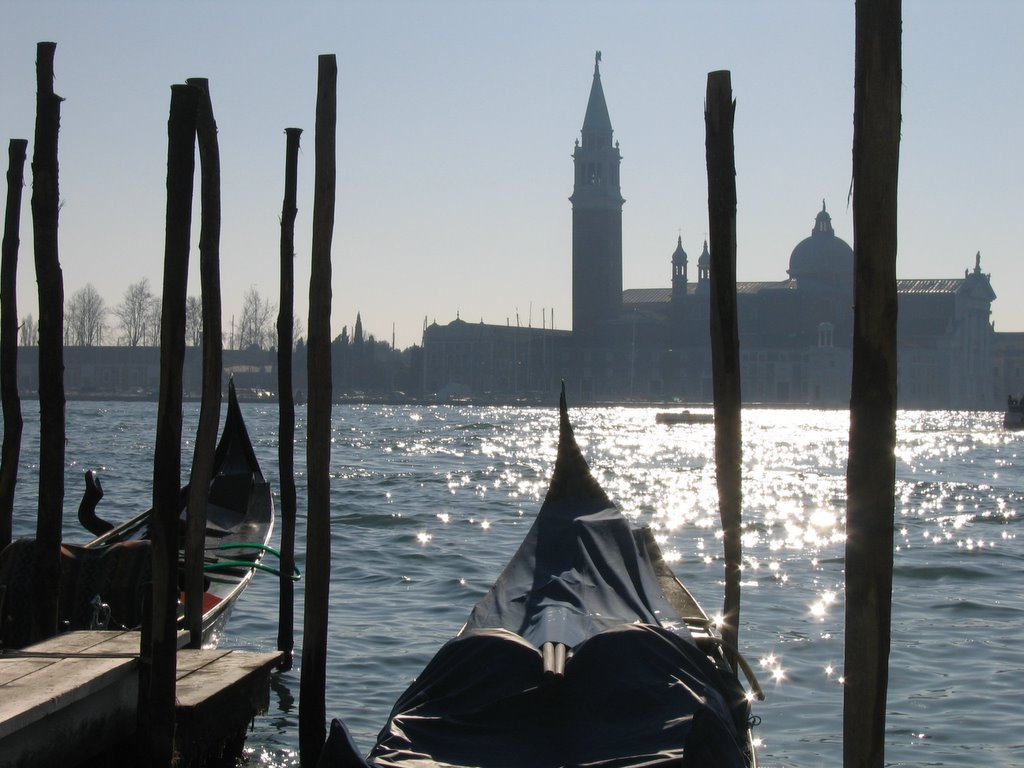
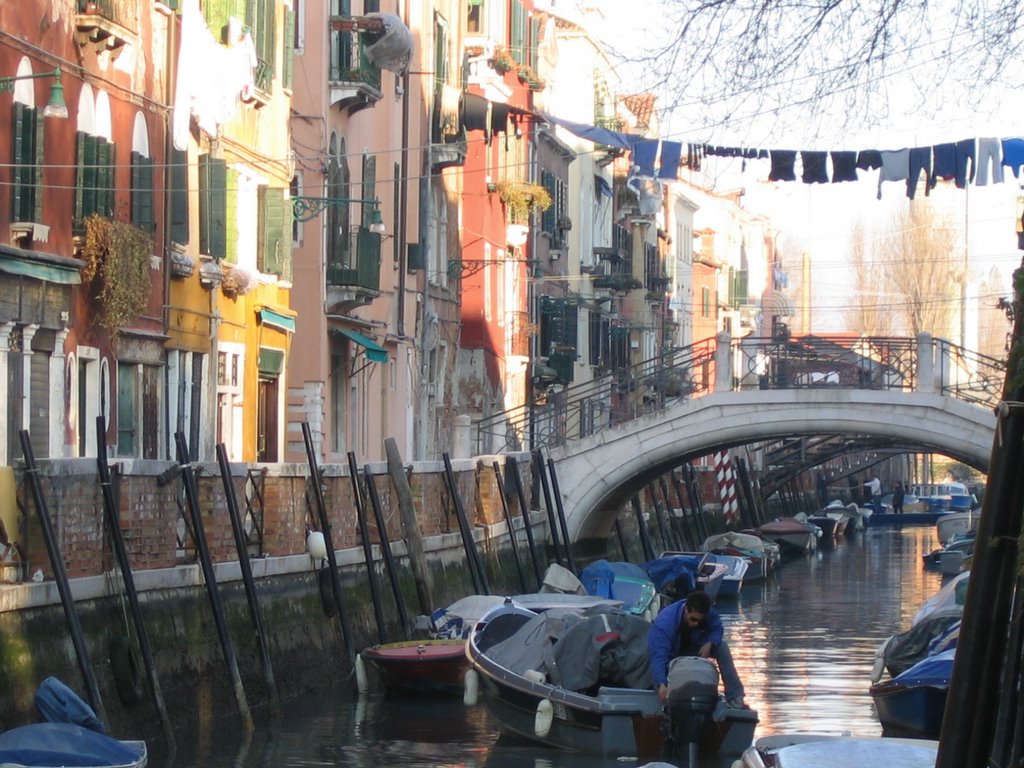
We spent another glorious day in Venice. It is such fun to climb aboard the train in Gorizia, sit on the north side and watch the Dolomite Mountains iced with snow glide by the length of the trip. Venice was cold, but no wind and if we stayed along the promenade on the seaside in the sun we were toasty warm. We le ft the island of San Marco, and the huge crowds, and walked around investigating Castello. There we discovered a road that is unusually wide because Napoleon filled in a canal to make a street. We saw the home of the explorer John Cabot [or Giovani Caboto as his parents named him] who discovered the coast of New Foundland, we saw where Henry James finished Portrait of a Lady, the church where Vivaldi created and performed his masterpieces, the Arsenale where the Venetian navy controlled the world and all of this is in a friendly little neighborhood where real people live. There is so much to discover!!!

Friday, January 27, 2006


Venice

Reflections
Canal life
Bob enjoying Venice?
Kay in the Piazza di St. Marco

Tuesday, January 24, 2006


Snow man wishing you a Merry Christmas and Happy 2006
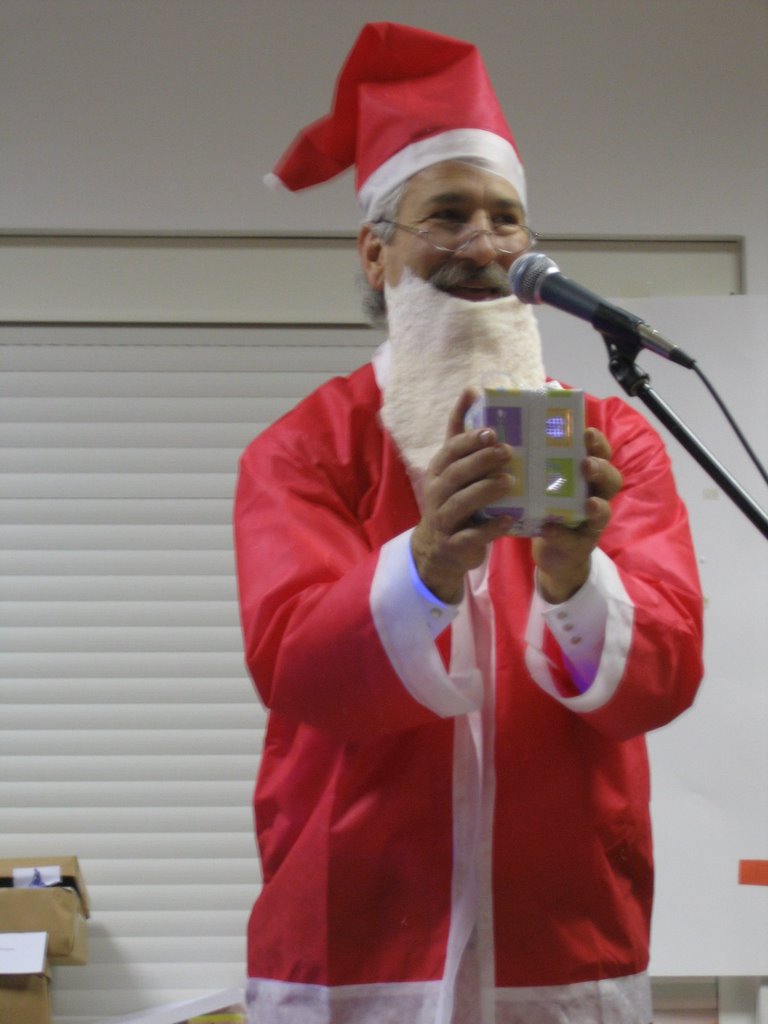
Bob as Santa
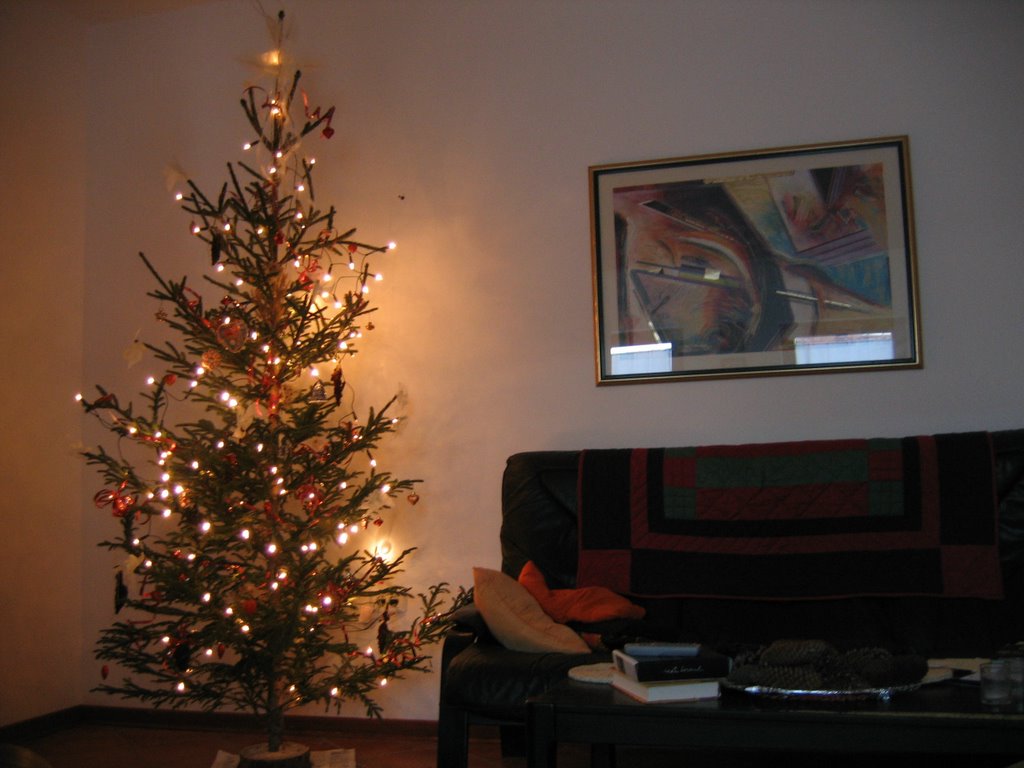
Our Christmas tree.


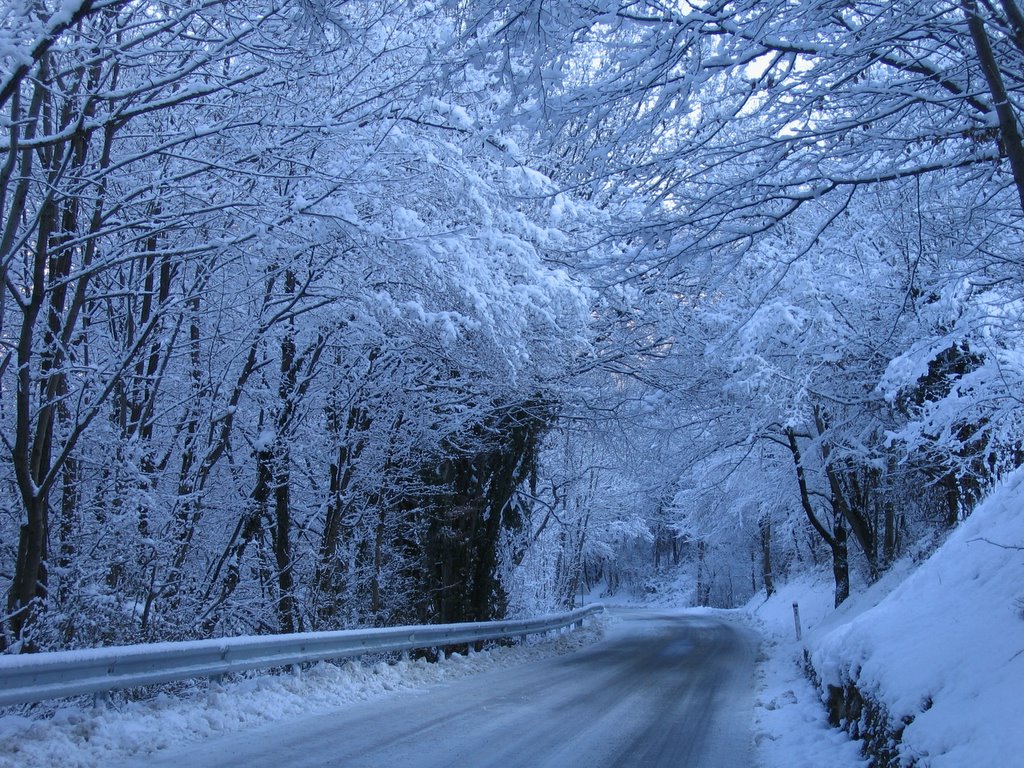
Tunnel of snow
Miramare
Sistiana beach
Gorizia castle under snow.

Monday, January 23, 2006

Christmas is a religious holiday in Slovenia. Santa does not come, but the baby Jesus does. Pilgrims climb the steep switch back road up the mountain to Sveta Gora for midnight mass carrying torches and candles. At the top of the mountain boiled wine, tea and grilled meats are available along with laughter and conversation to push away the cold. Lessons and carols start in the darkness of the giant cavernous sanctuary at 11:30. Silent Night [Sveta Noc^], along with many other familiar carols from around the world, is sung by the choir [in Slovene of course]. The mass begins with the lighting of blue lights on pine bows dangling from the top of the pillars and lights intertwined in red netting swooping down from the top of the altar giving the sense of wonder from above. The pews fill before the choir begins to sing and when mass starts at midnight people stand crushed together in the side aisles and along the back wall of the church. The body heat of the 800 parishioners in the freezing church sends warmth up to the choir in the back balcony, but multiple layers of clothing are a necessity to keep the chattering bones from increasing the vibrato in my sound. The priest has a terrible cold, but struggles rasping and choking the chants for those gathered to welcome the baby Jesus. The light of Bethlehem has flickered on the altar all week and now the holy family is in place on the moss carpeted nativity scene. When you drop a coin in the well the church bell rings, the water wheel goes around and the guard moves back and forth along the castle wall. Animals graze on the live moss cover and pastoral people stand frozen for generations for all to see.

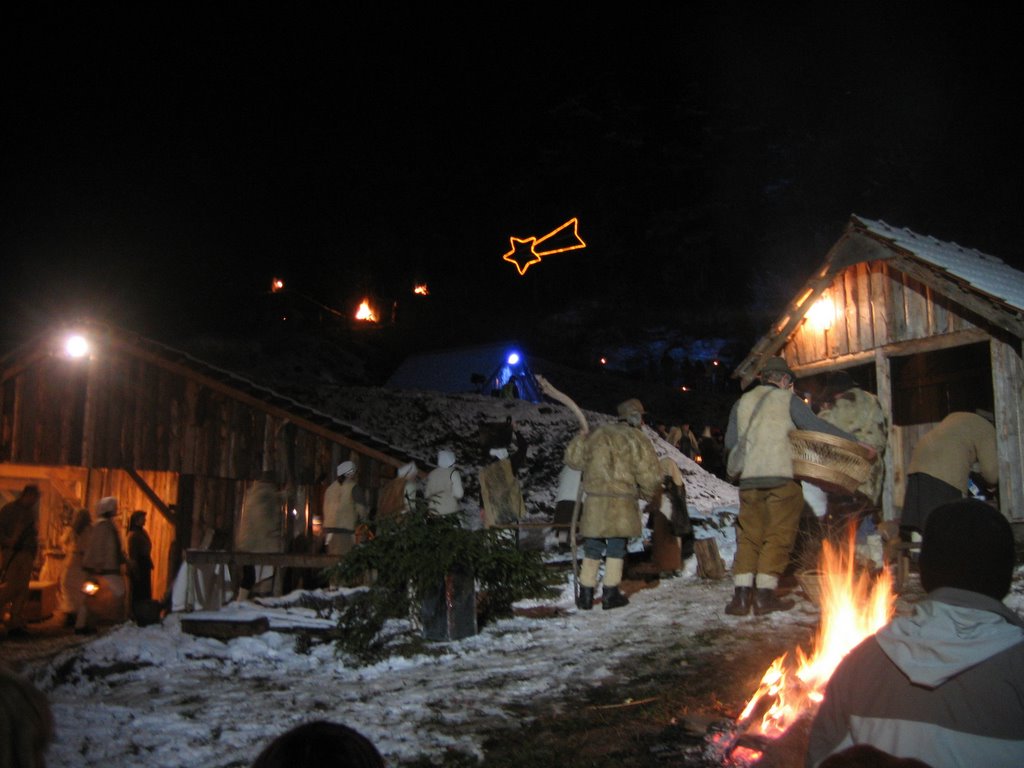
In the crooked old village of Mala Ligojna, near Ljubljana, a nativity pageant has been performed for the past 10 years. Hundreds of people gather after dark bearing candles and torches to follow Mary and Joseph as they search for a place to stay for the night. The couple stops first at the inn, but unfortunately just after a family with nine children who take every bed leaving no room for the little expectant family. Mary on her donkey, lead by Joseph, wanders down a winding road past the church to the shepherd’s settlement. Here children tend the sheep, men shoe horses, cut wood and thresh wheat, women make bread, wash clothes [in water from an icy pond], spin wool, make dolls and clothing surrounded by bon fires burning all around the village and up on the hillside. With a voice of singing the angels appear in blue light from the top of the hill dancing to the music in celebration of the birth in the stable. The shepherd community leaves their work running up the hill to the stable to see the miracle, and scatter when the 3 kings arrive on horseback delivering their gifts. Then all of the observers in modern synthetic clothes designed to keep us warm file, one by one, past the holy family with a real baby sleeping peacefully in the arms of his mother. The wonder and amazement was evident in every frozen breath. Despite the familiarities of the nativity story we all were silenced by the magic of the retelling on this glorious frozen snowy night.

December 26 is a national day of independence. Slovene flags fly on the light poles, but there is no other indication that this date celebrates the day that 90% of the country voted to become an independent nation in 1990. It feels more like a celebration of the day after Christmas and the towns are sleepy and quiet. Before WWII, Slovenians celebrated St. Nicholas Day on December 5th as the time for gift giving for the children and December 25th as the birthday celebration of Jesus. After the Socialists came to power in 1947 all private enterprise was nationalized and the celebrations of Christian holidays were banned. New Years Eve became the major winter celebration with New Year’s fir trees decorating the houses and Father Frost bearing gifts. Many who were raised in the past 59 years no longer follow the teachings of the church and New Years Eve remains the primary winter celebration with family parties and gift giving.

We bought a fir tree in the center of Nova Gorica. The trees here are young with open branches and tight needles along the branches that stand less than 6 feet tall. We carried the tree home from town balanced on Bob’s bicycle with both of us holding it steady and laughing at the stares we received along the way. The thin trunk is pounded into a round slab from a much larger pine tree and serves as the base. There is no expectation that trees will stay in the house longer than a couple of weeks so no one tries to preserve it in water. Throughout the fall I collected natural wonders when I walked along the railroad tracks. I tied ribbon to Japanese lanterns, sumac clusters, the seedpod of the magnolia tree, foxtail, and fluffy viney things and used them as natural decorations. I made small windmills from translucent paper, twisted red ribbon around the lights and added a few purchased ornaments to make one of the prettiest trees we’ve ever had [I say that every year]. We spent an entire day making potica and another making Christmas cookies. When we can only bake a dozen cookies at a time it takes all day to make 7 different kinds. We shared cookie trays whenever we visited with friends and family over the holiday. The rice crispy squares with ingredients sent from Ohio and the decorated cookies were the biggest hit. We have not been able to find marshmallows or Rice Crispy cereal here so the flavor is really unusual. They do not make many cut out cookies and it appears that decorating them with icing is a novelty as well. One woman asked me how I got the icing different colors, she had never used food coloring and I bought the only box in the store. American potica was a surprise to them as well. Potica is the only Slovene word that has not been translated and each kuhina is very proud of her recipe. Most of the fillings include walnuts, sugar, but also rum and lemon rind and the dough is more cake like. The potica Bob and I make every year is rolled very thin with beautiful spirals of yeast dough and walnut sugar mix and here in the birth place of potica we were constantly asked how we got the spirals so thin. Another marvel to my friends and his colleagues is that my husband assists in making the potica, not just the eating.

We have a rented car for this holiday time and are spending each day traveling around our region to discover more of what is in our back yard. The mountains are deep with snow and the ski resorts are celebrating their good fortune. Villages in the mountains are covered under white while the trees droop heavy with fluffy crystal snow. Road signs remind us that it is snowing and that since cars do not have “all weather tires” we should put on the chains. Bob is certain that if he took the tires inside the warm house with the instructions written in Italian it would still take him a month to figure out how to put the chains on. Apparently the police give heavy fines if tires are unsafely dressed, but fortunately we discovered the villages and towns with in a few miles of Nova Gorica in Slovenia and Italy with no incidents.

We drive into the Vipava valley where the history of the world was changed in this place. On 6 September 394AD the two Emperors Theodosius and Eugenius from the eastern and western Roman Empire met to determine the religious fate of the Roman lands. Theodosius, a Christian, was aided in battle by the burja winds that roar through this valley at speeds up to 70 – 80 miles an hour. According to legend, the winds flew from the back of the troops of Theodosius sending their arrows deep into the ranks of Eugenius’s men whose weapons were not strong enough to fight against the wind. Following this battle the empire became more and more intolerant of the pagan faiths and embraced Christianity in greater numbers. Today the Burja winds stop truck traffic on the highway. The police force high profile trucks to park along the road, sometimes for days, until the winds stop. There are windsocks and electronic signs identifying the speed of the wind along the road and it is almost impossible to walk upright during the gusts of the burja.

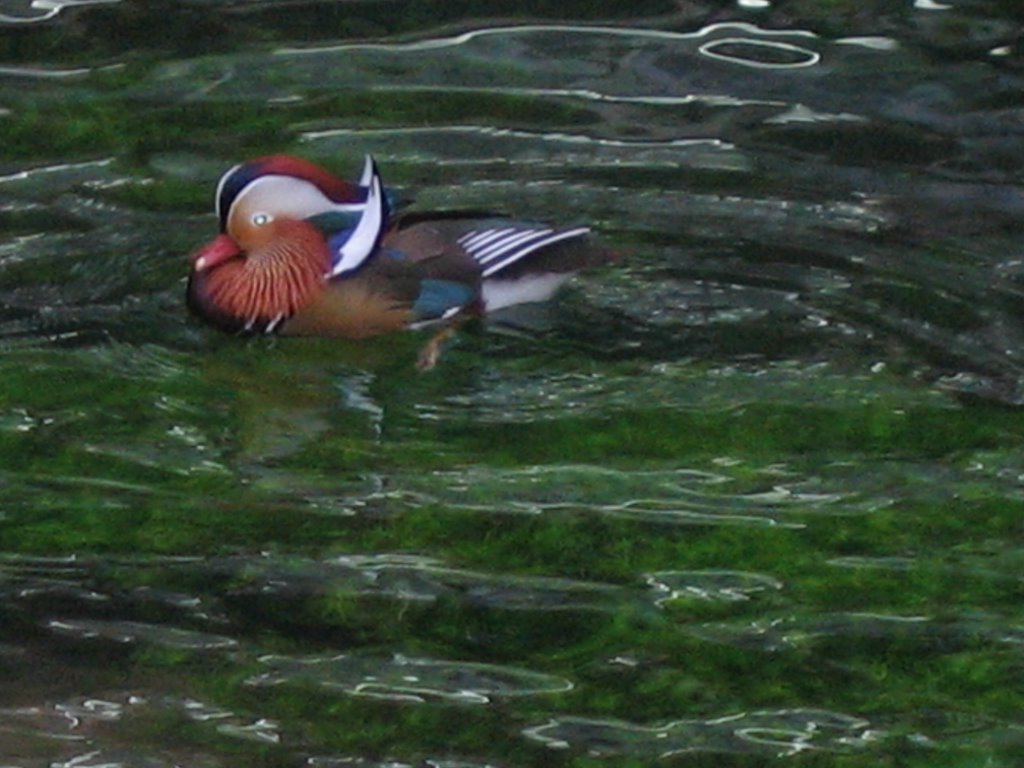
The town of Vipava is built on the source of the Vipava River. The water pours from under the foothills in a massive flow that instantly becomes a roaring river. A manor house once owned by the Hapsburgs cradles the river source, but sadly appears to be loosing its battle for life. Performances of operas are apparently performed in the gardens in the front of the house during the summer and I can imagine an artist colony behind these walls. Musicians and visual artists arriving to study with the masters in a beautifully restored chateau, performing concerts and gallery shows weekly throughout the summer and restoring their creative genius with fresh mountain water, local cuisine and Vipava wine. If only I had a treasure chest available to me to make my imaginings possible. In the source of the river we saw a Mandarin duck swimming amidst the mallards [see photo]. He is the most colorful and unusual creature we have ever seen. His native habitat is Korea, China and Japan, but they have recently been introduced into the fowl population in the British Isles. How he managed to be swimming on a snowy day in the Vipava River we will never know.

We drive along the winding paths of the Gri^ska Brda and the Primor^ska regions leading from one vineyard to the next. On every inch of cultivated land the vines are planted in straight lines and terraced up the hillsides. I’m sure that working the fields for a lifetime would cause a person to have a permanent limp. The larger vineyards have trimmed the vines to the trunk with a few shoots, the smaller growers do that work in February after the cold, but all the vineyards are neat and free of fallen leaves and sticks. The smaller vineyards are struggling for their existence now that Slovenia is a member of the European Union. The legal paper work for the registered vineyards is forcing small growers to pull their name from the registry. They are required to keep a ledger of every bottle produced including those given as gifts. The detail of taxation is determined by the number of bottles produced not by those sold, which changes the spirit of creating wine and sharing it with friends and families. The local understanding is that the large wine growers of France and Italy in the EU are attempting to eliminate competition from the smaller homegrown wine makers of Slovenia and forcing them out of business. If that is the case the economy and the life style of this area will drastically change leaving this land and the villages without purpose.

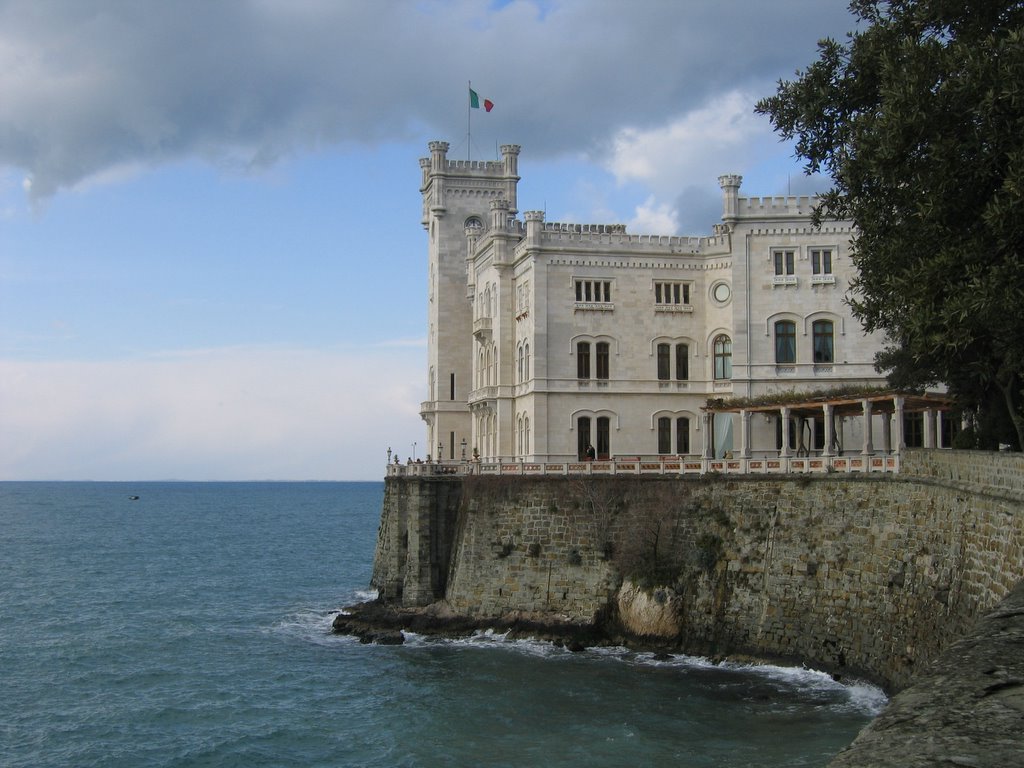
“There hasn’t been snow on the ground in Nova Gorica for 20 years,” yet I look out our window and see 3 inches of snow covering the red tile roofs and the palm trees. We decide to head to the Adriatic coast and the castle of Miramare up the coast from Trieste, Italy. Miramare was the home of Archduke Maximiliam of Hapsburg [eventually the Emperor of Mexico] and his wife Carlota of Belgium. It was built on the cliffs of the Adriatic Sea between 1856 and 1860 under the specific designs of Maximilian himself. He created exceptional exotic botanical gardens on the land above the castle and humble dwellings [by Hapsburg standards] on the first floor housing the priceless items collected from their trips around the world. The setting has unobstructed views of the Adriatic Sea on 3 sides of the house, gardens in the front and a terrace surrounding the entire house providing walkways in the salt air. When he was appointed Emperor of Mexico the second floor rooms were created as public rooms suitable to his position as a world leader. Unfortunately his reign in Mexico was peppered with turmoil, rebellion and broken promises that ended in his execution. He never saw the castle finished to his specifications, and if there had been a hint that his Mexican reception was going to end so badly I think he never would have left his haven by the sea.

I performed two concerts this week with flutist Armando Martiutti and organist Bernarda Pa^skvan in churches in the near by towns of Ajdov^s^cina and ^Sempeter. Armando designed the program to include many of the most beautiful pieces ever written that would be acceptable to perform in an ancient church with organ. We had an amazing audience of over 300 crowded in the ^Sempeter church. One woman who arrived late said that she likes to be comfortable when listening to music, but the performance was so beautiful that she forgot that she was standing for the entire concert in a freezing church on the coldest night of the year. I have grown so accustomed to choosing music for the palate of American audiences that I would never have programmed Bach, Telemann, Scarlatti, Cherubini, Mozart and Schubert for fear of having no one in attendance. Even when the programming is interesting there is so little chance of having a decent audience in the U.S. especially when there are other performances happening at the same time. But on this night there were large, well-advertised concerts in both Nova Gorica and Gorizia and still a capacity audience braved the inclement weather to be warmed to the soul. This was certainly the first time I’ve sung a concert wrapped in coats, scarves with the instrumentalists wearing fingerless gloves. Fortunately we stood in the back in the balcony with the organ so no one could see our odd concert attire.

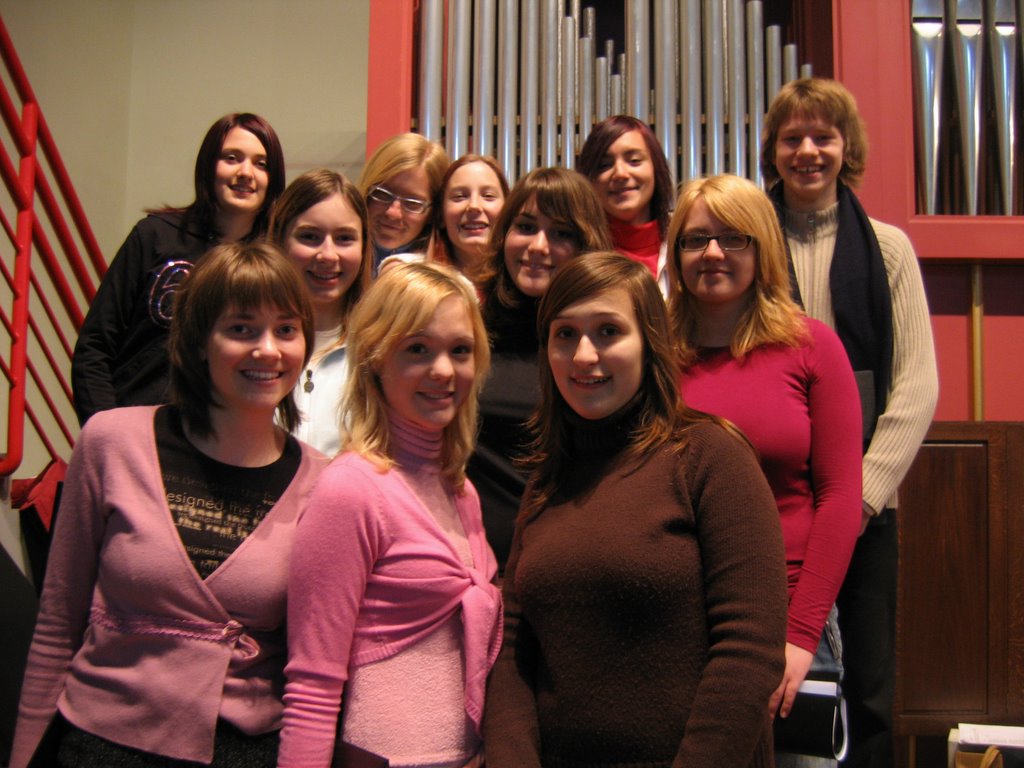
My student American Choir from the gimnazia sang for the end of the 2005 school year program before a respectful attentive audience of over 1,000 students and teachers. They sang, “Something Told the Wild Geese”, a peace round, and “Carol of the Bells”. One gentleman thought that they actually were an American choir because their American English was so good. We have been working at length on proper American pronunciation - no rolled R’s, an [I] sound [as in bit] rather than [i] sound [as in beet] for the letter I, the L and R produced from the back of the tongue rather than the tip of the tongue, etc. The students were very happy and proud of themselves after the response of wild applause and many congratulations for their fine performance. I too was very proud of them and pleased that their peers appreciated their hard work. The Headmaster of the school struggled with his uncomfortable English to thank both Bob and me for all that we are giving and sharing with the students at the school. His kind words were just one of the ways we are feeling so very appreciated here for our talents. It is a rare, but wonderful experience to feel appreciated. We also were included as guest performers at the staff Christmas party. Bob played Santa Claus and I sang and lead our English conversation group in “Go Tell It on the Mountain”, “The Twelve Days of Christmas” [with motions] “Silent Night” in German, English and Slovene and “We Wish You a Merry Christmas”. I left at 12:30, Bob left at 2:30, but many of the teachers stayed dancing until 4:00am. We are discovering that these Slovenes really like to party.

We crossed the doors of the Perla Casino one night to hear a concert of The New Sing Quartet. We were advised to go to the venue for the free concert at 9:00 to get seats for the 10:00 performance. No seats were available and within that hour hundreds more filed into the space leaving no room to move. [The U.S. fire marshals would be having heart attacks] The quartet is four middle age pot bellied Slovenian men who sang American Southern Baptist/AME gospel arrangements of Christmas songs and spirituals in a Casino with the ring of slot machines in the back ground. We kept shaking our heads because too many components of this picture did not jell. We of course thought we were going to hear four Slovenian men sing the rich powerful harmonies of traditional Slovenian music so listening to the Slovenian Statler Brothers was challenging to our ears. The people here love American music of all kinds and particularly spirituals, gospel, jazz and of course rock and roll. American music may be the death of traditional music around the world. We have to listen to WZIP from Akron on Saturday afternoons by Internet to hear traditional Slovenian polkas. And when we are invited to the homes of our new friends they pull out their Country Western CD’s so we will feel at home. If only they understood how disappointed Bob is to not be able to hear Slovenian songs. I found the name of a man who may be able to teach him to play the “old” songs on the button box accordion so that when we go home he can take the traditions home with him.

2005 ended with a party in our neighborhood. Five couples gathered for snacks, home made wine, champagne, fireworks and dancing. Fireworks are legal for home use during the week between Christmas and New Years, so we have been shocked out of our socks by explosions all week. One family had small and large fireworks blasting all night sending their cocker spaniel into fits of terror each time. At the stroke of midnight Gorizia filed the sky above the castle with a brilliant display that would rival any Cleveland Indians Friday night baseball game. We rejoiced with champagne, three kisses on the cheek for good luck and the greeting of Sre^cno. We danced into the morning first with Am. pop songs until Bob brought his polka CD and then everyone polkaed into the New Year. Maybe Bob will be partly responsible for the celebration of traditional music again in Slovenia.

Thursday, January 05, 2006


Nada and Armando in concert dress?
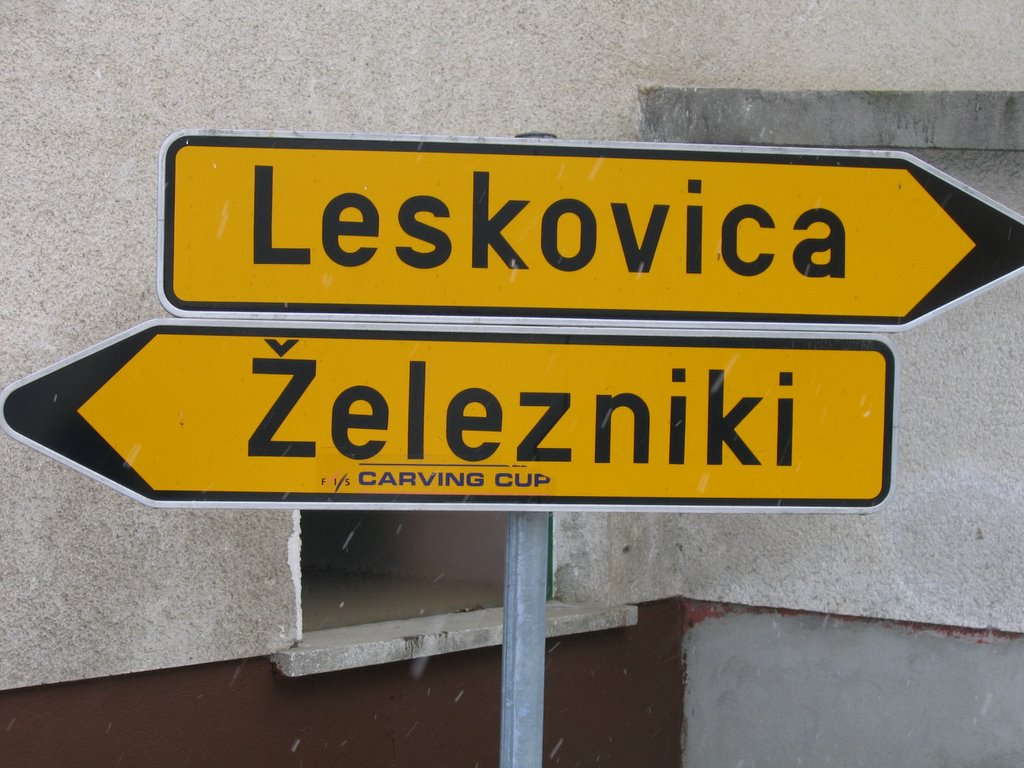
Sign with the 2 names of Bob's families
Mandarin duck
Sign warning of snow and chains
American choir


Mala Ligonja nativity pageant